Vietnam Street Food Guide: Where and What to Eat
Vietnamese street food is one of the best ways to understand the country. Food is not separated from everyday life here: breakfast can be a steaming bowl of phở eaten on a small plastic stool, lunch may be bún chả grilled over charcoal, and the evening can finish with chè, fresh fruit or Vietnamese coffee. What makes Vietnamese street food particularly interesting is its regional diversity. Hanoi has a different food personality from Hue, Hoi An or Ho Chi Minh City, and even familiar dishes can change noticeably from one city to another. Vietnam’s official travel information describes this regional variation clearly, noting that Northern cuisine is generally simpler, Central food is more strongly seasoned and Southern cooking tends to be sweeter.
For visitors, the biggest challenge is not finding food. There is food almost everywhere. The challenge is knowing what to eat, where to look, when to go and how to choose a good local place. This guide covers the most important Vietnamese street foods, the best cities and neighborhoods to try them, how to plan a street-food itinerary and practical tips for eating confidently.
Why Vietnamese Street Food Is So Special
Vietnamese street food is closely connected to neighborhood life. Vendors often specialize in just one or two dishes instead of serving a huge menu. A small shop may spend decades perfecting one noodle broth, one grilled dish or one type of rice cake.
Street food also follows the rhythm of the day. Some vendors specialize in breakfast and close before lunch. Others become busiest in the evening. Knowing this makes a major difference because the best time to eat a dish is often the same time local residents eat it.
Hanoi’s official food guide emphasizes that many of the capital’s most distinctive foods are found directly on the streets, from phở, bún chả and bánh mì to bánh cuốn, chả cá and various noodle dishes.
1. Phở
Phở is the obvious starting point. Flat rice noodles are served in a fragrant broth with beef or chicken, herbs and seasonings. Hanoi’s version is particularly associated with a clear broth and relatively restrained seasoning, while Southern versions commonly come with a larger selection of fresh herbs and bean sprouts.
The best way to eat phở is simple: taste the broth first. Then add herbs, chili or lime according to your preference.
Best time: Breakfast or early morning.
Best place: Hanoi for a classic Northern experience.
2. Bún Chả
Bún chả is one of Hanoi’s essential street foods. Charcoal-grilled pork patties and sliced pork belly are served with rice vermicelli, fresh herbs and a sweet-sour dipping sauce.
The smoky aroma from the grill is part of the experience. You will often see the pork cooking right beside the sidewalk as customers sit on low stools.
Vietnam’s official culinary information identifies bún chả as a classic Hanoian lunch dish.
Best time: Lunch.
Best place: Hanoi.
3. Bánh Mì
A Vietnamese bánh mì uses a crisp baguette filled with ingredients such as pâté, meat, Vietnamese sausage, pickled vegetables, cucumber, herbs and sauces.
It is one of the easiest street foods for first-time visitors because it is inexpensive, portable and available throughout the country. The fillings vary significantly between regions.
Best time: Breakfast, lunch or late-night snack.
Best place: Nationwide, with Hoi An and Ho Chi Minh City particularly famous for their local styles.
4. Bánh Cuốn
Bánh cuốn consists of delicate steamed rice sheets, commonly filled with minced pork and wood-ear mushroom, then served with herbs, fried shallots and dipping sauce.
The sheets are made fresh and are often steamed to order in front of customers. Watching the cook spread the batter into an almost transparent layer is part of the experience.
Hanoi food guides identify bánh cuốn as a traditional breakfast in the capital.
Best time: Breakfast.
Best place: Hanoi and Northern Vietnam.
5. Chả Cá
Chả cá is another Hanoi specialty worth seeking out. Fish is marinated, grilled and then cooked with spring onions and dill, often at the table.
The combination of fish, dill, herbs, noodles and peanuts makes this very different from standard Vietnamese noodle dishes.
Vietnam’s official food guide describes chả cá as particularly associated with Hanoi and emphasizes the importance of the marinade and family recipes.
Best time: Lunch or dinner.
Best place: Hanoi.
6. Phở Cuốn
Phở cuốn uses soft rice sheets wrapped around beef, herbs and fresh vegetables, usually served with dipping sauce.
Unlike a bowl of phở, this is a lighter and more interactive dish. It is also easy to share, making it useful for food tours where you want to try several dishes.
Best place: Hanoi, particularly around the Trúc Bạch area.
7. Bún Đậu Mắm Tôm
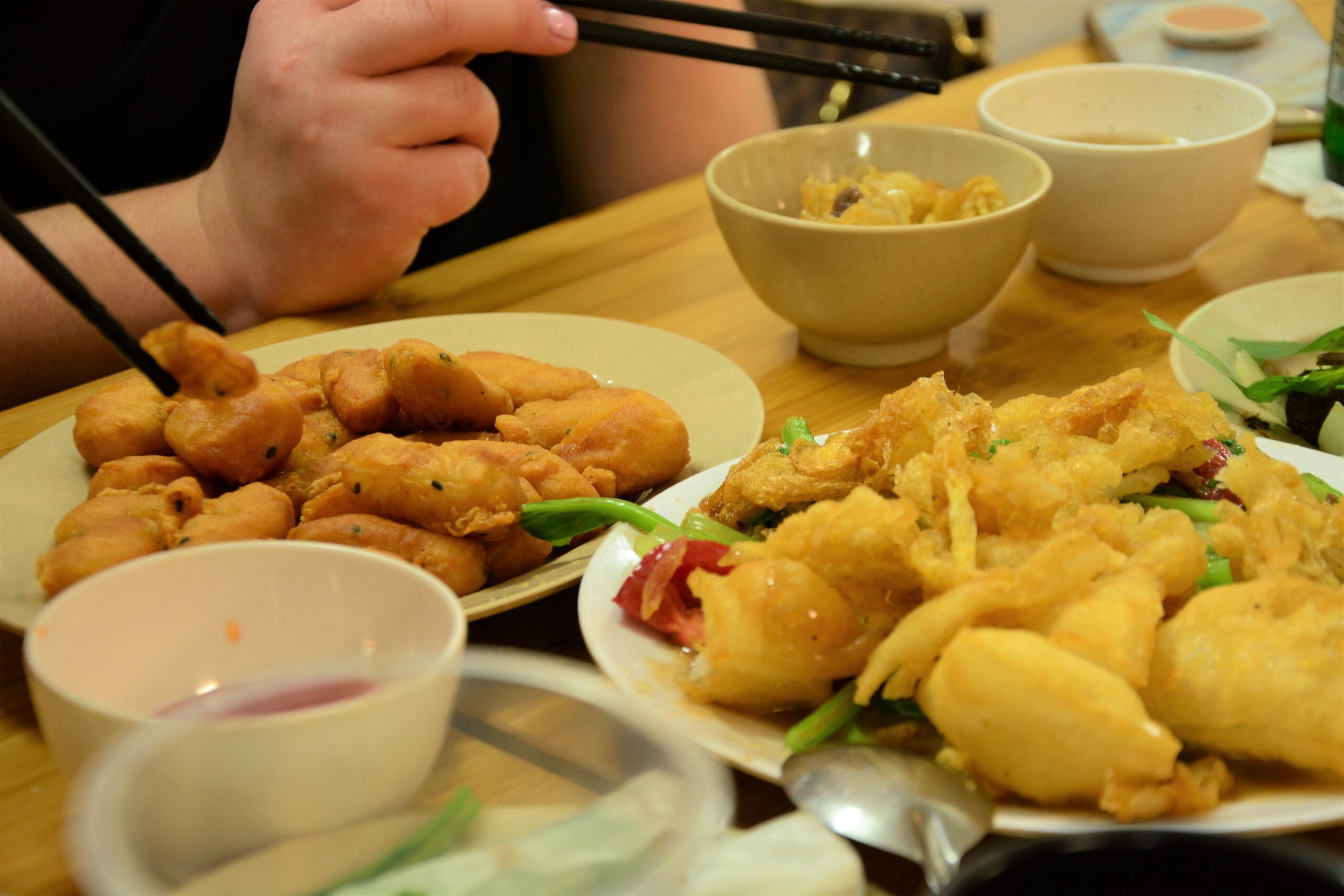
Bún đậu mắm tôm combines rice vermicelli, fried tofu, fresh herbs and fermented shrimp paste. Some versions also include pork sausage and other ingredients.
The shrimp paste has a strong, distinctive aroma. Travelers who are unfamiliar with fermented seafood should start with a small amount.
Best place: Hanoi and Northern Vietnam.
8. Bún Ốc
Bún ốc is a Hanoi noodle dish made with freshwater snails and rice vermicelli. The broth often contains tomato and sour elements, giving it a refreshing flavor.
This is a good choice once you have moved beyond the familiar foods. It shows the diversity of Hanoi’s traditional street cuisine.
Best time: Morning or lunch.
Best place: Hanoi.
9. Bún Thang
Bún thang is a delicate Hanoi noodle dish made with ingredients such as shredded chicken, Vietnamese ham and omelet in an aromatic broth.
Unlike bún chả, which is casual and smoky, bún thang represents a more intricate side of Northern cooking.
Best place: Hanoi.
10. Bún Cá
Bún cá combines rice vermicelli, fried fish, herbs and broth. The contrast between crispy fish and soft noodles makes it particularly enjoyable.
Regional variations are common, so trying it in different cities can be interesting for travelers who enjoy comparing local cuisine.
11. Miến Lươn
Miến lươn is made with glass noodles and eel, with versions ranging from brothy to dry preparations.
It is not usually the first dish recommended to visitors, which is exactly why adventurous travelers should look for it.
Best place: Hanoi and Northern Vietnam.
12. Bánh Xèo
Bánh xèo is a crispy savory pancake made from rice batter and filled with ingredients such as shrimp, pork and bean sprouts.
It is normally eaten with herbs and dipping sauce. Tear off a piece, wrap it with herbs and lettuce and dip it before eating.
The style differs considerably between Central and Southern Vietnam.
13. Gỏi Cuốn
Gỏi cuốn, or fresh spring rolls, are made from rice paper wrapped around ingredients such as shrimp, pork, rice noodles, lettuce and herbs.
They are especially refreshing in hot weather and provide a lighter alternative to fried street food.
Best place: Nationwide, particularly Central and Southern Vietnam.
14. Nem Rán
Nem rán is the Northern name for fried spring rolls. The filling commonly includes minced pork, glass noodles, mushrooms and vegetables.
The outside should be crisp while the interior remains moist and flavorful.
Best place: Hanoi and Northern Vietnam.
15. Chả Giò
Chả giò is commonly used in Southern Vietnam for fried spring rolls. The difference between chả giò and Northern nem rán can be subtle, but recipes and fillings vary by region.
Trying both is an easy way to see how Vietnamese street food changes geographically.
16. Cơm Tấm
Cơm tấm, or broken rice, is strongly associated with Southern Vietnam, especially Ho Chi Minh City. A classic version includes grilled pork, egg, vegetables and fish-sauce dressing.
Vietnam’s official food guide describes broken rice as a humble working-class food that has developed into a major Southern staple.
Best place: Ho Chi Minh City.
17. Hủ Tiếu
Hủ tiếu is a Southern noodle dish that can contain pork, seafood, shrimp and other ingredients. It may be served as a soup or as dry noodles with sauce.
It is particularly worth trying when traveling through Southern Vietnam and the Mekong Delta.
18. Bún Bò Huế
Bún bò Huế is a spicy beef noodle soup from Hue. The broth is typically richer and more strongly flavored than Northern phở, with lemongrass and chili playing important roles.
Vietnam’s official culinary guide describes it as one of the defining specialties of Central Vietnamese cuisine.
Best place: Hue.
19. Mì Quảng
Mì Quảng comes from Central Vietnam, especially Quang Nam and Da Nang. Thick rice noodles are served with a relatively small amount of concentrated broth, meat or seafood, herbs, peanuts and crunchy rice crackers.
It is part soup, part noodle salad and completely different from phở.
Best place: Da Nang and Quang Nam.
20. Cao Lầu
Cao lầu is one of Hoi An’s signature street-food dishes. Thick noodles are combined with pork, herbs, greens and crispy pieces.
Its distinctive texture and strong connection with Hoi An make it one of the dishes travelers should try specifically in the Ancient Town. Official Vietnamese culinary information identifies cao lầu as a signature Hoi An specialty.
21. Cơm Gà Hội An
Cơm gà Hội An combines turmeric-colored rice, shredded chicken, herbs, pickled vegetables and a flavorful dressing.
It is an excellent choice for travelers who want something different from noodles while still experiencing a distinctly Central Vietnamese flavor profile. Vietnam’s official food guide highlights Hoi An chicken rice as one of the city’s characteristic dishes.
22. Chè
Chè is a large family of Vietnamese sweet soups and desserts. Different versions use beans, coconut milk, jelly, fruit, lotus seeds or glutinous rice.
There is no single standard chè, so one evening you might try a colorful cold dessert while another version is warm and thick.
Best time: Afternoon or evening.
23. Vietnamese Egg Coffee
Egg coffee, or cà phê trứng, is strongly associated with Hanoi. Strong coffee is topped with a sweet, creamy egg mixture, creating a drink that is almost a dessert.
It works particularly well after a street-food meal because one small cup can serve as both coffee and dessert.
24. Vietnamese Iced Coffee
Cà phê sữa đá combines strong Vietnamese coffee, condensed milk and ice.
You will find it everywhere, from sidewalk cafés to modern coffee shops. For a more traditional experience, look for a small café where the coffee is still brewed through a metal phin filter.
25. Grilled Meat
Vietnamese streets are full of grilled pork, chicken, beef and seafood, especially in the afternoon and evening.
Look for charcoal grills where meat is cooked continuously rather than sitting pre-cooked for long periods. Grilled food is particularly good for sharing with friends.
26. Seafood Street Food
Along Vietnam’s coast, seafood becomes an important part of street dining. Depending on the destination, you may find grilled squid, prawns, clams, oysters, crab and local fish.
Coastal cities and markets are the best places to explore this category because freshness matters considerably.
27. Fresh Tropical Fruit
Vietnam offers a huge range of tropical fruit including mangosteen, rambutan, dragon fruit, mango, longan, pomelo and jackfruit.
Markets are ideal places to buy fresh fruit. Ask the vendor to cut it for you if necessary and try seasonal varieties that you may not find at home.
28. Sticky Rice
Xôi, or sticky rice, is a common Vietnamese breakfast and snack. It can be served simply with peanuts or mung beans or topped with chicken, pork, corn and other ingredients.
It is cheap, filling and particularly useful for travelers who want an early-morning meal before sightseeing.
29. Vietnamese Sweet Snacks
Street vendors also sell a wide range of smaller sweets and snacks made from rice flour, coconut, beans, banana and glutinous rice.
These are ideal for travelers who want to keep eating portions small while exploring a market or neighborhood.
30. Vietnamese Hot Pot
Lẩu, or Vietnamese hot pot, is particularly popular in the evening. A steaming pot is placed in the middle of the table while diners add meat, seafood, vegetables and noodles as they eat.
It is a great choice for groups because the meal is naturally social and can be shared over several hours.
Where to Eat Street Food in Hanoi
Hanoi is arguably the best city in Vietnam for beginning a street-food journey. The Old Quarter has an enormous concentration of small food businesses, cafés and sidewalk vendors.
Hoan Kiem Lake is another useful base because you can combine food with sightseeing. The area around Dong Xuan Market is excellent for exploring local food and market life.
The Trúc Bạch and Ngu Xa area is particularly relevant for dishes such as phở cuốn and other noodle specialties, while smaller residential streets often provide a more local environment than the busiest tourist roads.
Hanoi’s official food guide emphasizes that the city has far more than the three internationally famous dishes of phở, bún chả and bánh mì.
Where to Eat Street Food in Ho Chi Minh City
Ho Chi Minh City has a more Southern food personality, making it an excellent place to try cơm tấm, hủ tiếu, bánh xèo, chả giò and Southern desserts.
Explore food around local markets, busy residential streets and neighborhood restaurants rather than limiting yourself to major tourist shopping districts.
The city is also ideal for evening street-food exploration because many vendors become active after sunset.
Where to Eat Street Food in Hue
Hue is the place to focus on bún bò Huế and Central Vietnamese specialties. Smaller local restaurants often specialize in one or two dishes, making it easy to compare versions.
Look beyond the major tourist streets and explore neighborhoods where local residents eat.
Where to Eat Street Food in Hoi An
Hoi An’s compact Ancient Town makes food exploration easy on foot. Try cao lầu, mì Quảng, cơm gà Hội An and local bánh, then stop at a café beside the river.
Because the historic center is walkable, you can combine sightseeing and several food stops without transportation.
Where to Eat Street Food in Da Nang
Da Nang offers an excellent mixture of Central Vietnamese noodles, seafood, bánh xèo and grilled dishes.
The city is particularly useful for travelers who want traditional Central food without the denser tourist environment of Hoi An’s Ancient Town.
Where to Eat Street Food in the Mekong Delta
The Mekong Delta is ideal for travelers interested in fresh fruit, freshwater fish, regional noodles and Southern home-style dishes.
Local markets are especially interesting because you can see the ingredients that later appear on the plate.
Best Time for Vietnamese Street Food
Early morning: phở, bánh cuốn, xôi and other breakfast dishes.
Late morning to lunch: bún chả, noodle dishes, rice meals and bánh.
Afternoon: coffee, chè, fruit and smaller snacks.
Evening: grilled meat, seafood, street-food snacks and hot pot.
Eating around local meal times is one of the easiest ways to improve the experience because vendors are working with fresh ingredients and the neighborhood is naturally active.
How to Find Good Street Food
Don’t automatically choose the stall with the biggest tourist crowd. Look for steady local customers, fresh preparation, a focused menu and good ingredient turnover.
A tiny restaurant selling one specialty to local customers can be more interesting than a large restaurant offering fifty dishes.
Also observe how food is stored, whether cooked food is kept hot and whether the preparation area looks reasonably clean.
Street Food Safety in Vietnam
Street food can be enjoyed responsibly with normal precautions. Choose food that is freshly cooked, especially dishes involving meat, seafood, eggs or broth. Wash your hands before eating when possible and be cautious with raw ingredients if you have a sensitive stomach.
You do not need to eliminate street food from your trip. It is one of the most important parts of Vietnamese food culture.
How Much Does Vietnamese Street Food Cost?
Prices vary significantly between cities, neighborhoods and restaurants. Small local dishes are generally inexpensive compared with sit-down international restaurants, while seafood and specialty dishes can cost considerably more.
Rather than choosing solely according to price, ask what the portion contains and compare several local places.
How to Order Street Food in Vietnam
You can use a translation app, point at food being prepared or ask a local guide for help.
Learn a few useful words such as “không cay” for not spicy and “ít cay” for less spicy if you have a low tolerance for chili.
For dishes served with herbs and sauces, watch how other customers eat them and ask your guide when necessary.
How to Eat Vietnamese Street Food
Many dishes are designed to be customized. Fresh herbs, lime, chili, fish sauce and other condiments may be provided separately.
Taste the dish first before adding anything. Then experiment until you find the balance you like.
With noodle dishes, herbs are often mixed directly into the bowl. With grilled meat, lettuce and herbs may be used as wraps.
Street Food and Vietnamese Coffee
Coffee is an essential part of the street-food experience. Don’t treat it simply as a beverage between meals.
Sit at a small café, watch the street and take your time. In Hanoi, trying egg coffee after dinner is almost part of the traditional food-tour experience.
Street Food Tours vs Eating Independently
Eating independently gives you maximum freedom and is perfect when you already know what you want.
A guided street-food tour is better for first-time visitors because the guide can explain menus, choose reliable food stops, order portions and introduce dishes that are difficult to identify from appearance alone.
A good food guide also provides cultural context instead of simply taking you from restaurant to restaurant.
Hanoi Street Food Tours by Motorbike
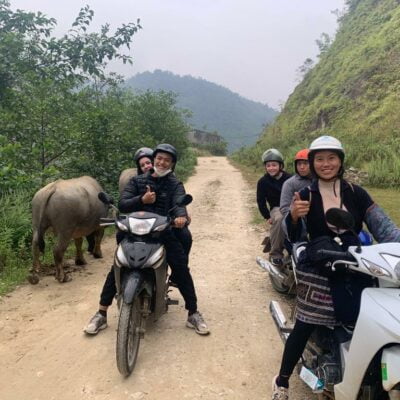
A Hanoi Motorbike Street Food Tour is particularly useful when you want to try food in several neighborhoods during the same evening. Instead of remaining inside the Old Quarter, you can ride to different areas and discover dishes that you would probably miss on foot.
Traveling as a passenger with a professional rider also means you can enjoy Hanoi’s streets without having to navigate the traffic yourself.
Hanoi Street Food Tours Led by Women
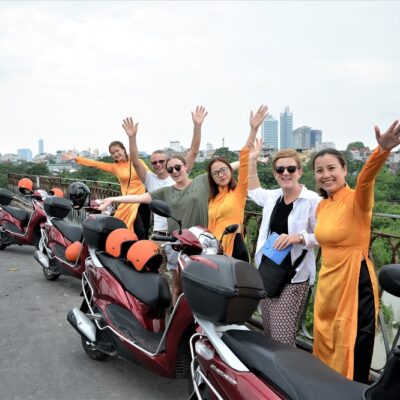
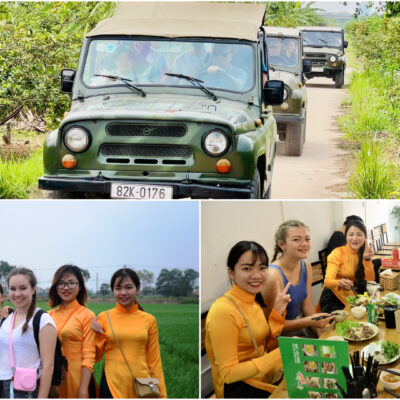
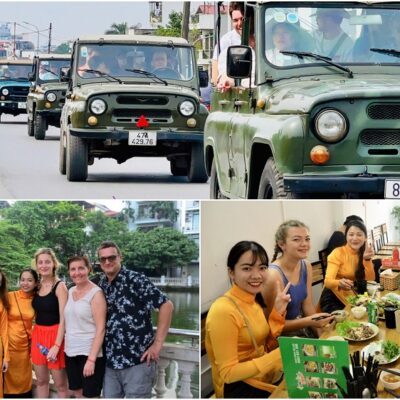
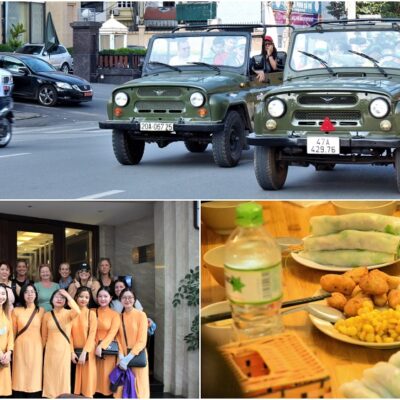
A Hanoi Street Food Tour Led by Women combines local cuisine with the perspective of professional female guides and riders. The experience is suitable for couples, families, solo travelers and private groups.
Instead of simply telling you the name of a dish, the guide can explain how it is eaten, when locals traditionally eat it, what ingredients are used and how the food connects with Hanoi’s neighborhoods.
Private Vietnamese Street Food Tours
Private food tours are particularly useful for travelers with specific interests or dietary requirements. A couple might want a romantic evening, a family may need milder dishes and shorter stops, while a group of friends may want to try as many different specialties as possible.
The route can be adjusted around your appetite and interests.
Hanoi Street Food for First-Time Visitors
A first-time Hanoi food itinerary should include phở, bún chả, bánh cuốn, chả cá, bánh mì and egg coffee.
Once you have tried the classics, move on to bún đậu, phở cuốn, bún ốc, bún thang and miến lươn.
This gives you both the internationally famous dishes and a deeper look at traditional Northern food.
Street Food for Adventurous Eaters
Travelers who enjoy unfamiliar flavors should try bún đậu mắm tôm, bún ốc, miến lươn and fermented sauces.
The best strategy is to try small portions first. You can always order more, but discovering that you don’t like a huge plate of something unfamiliar is a very different experience.
Street Food for Vegetarians
Vegetarian street food is increasingly available, especially in larger cities. Look for vegetarian noodle soups, tofu dishes, vegetable rice, mushroom dishes and vegetarian bánh.
Always explain dietary requirements clearly because fish sauce, shrimp paste and animal broth can appear in dishes that look vegetarian.
Street Food for Families
Families can begin with phở, bánh mì, grilled chicken, spring rolls, rice dishes and fresh fruit.
For older children, introduce bún chả, bánh xèo and Vietnamese desserts.
A private food tour can be particularly useful because the guide can control the number of stops and adapt food choices to the family.
Street Food for Couples
Couples can turn a street-food tour into an evening experience. Start with a few savory dishes, ride through Hanoi’s illuminated streets, stop for Vietnamese coffee and finish with dessert.
A private Vespa or motorbike tour adds sightseeing between the food stops.
Street Food for Groups
Groups should focus on dishes that are easy to share: grilled meat, spring rolls, hot pot, seafood, vegetables and rice dishes.
Ordering several different items allows everyone to taste more without ordering an enormous individual meal.
Best Street Food Itinerary in Hanoi: Morning
8:00 AM: Phở or bánh cuốn.
9:00 AM: Walk around Hoan Kiem Lake and the Old Quarter.
10:30 AM: Vietnamese coffee.
This gives you food, sightseeing and coffee without rushing.
Best Street Food Itinerary in Hanoi: Afternoon
12:00 PM: Bún chả.
1:30 PM: Rest or explore a market.
3:00 PM: Chè or another Vietnamese dessert.
4:00 PM: Traditional coffee.
Afternoon food tours work best when portions remain small.
Best Street Food Itinerary in Hanoi: Evening
6:00 PM: Bánh cuốn or a local snack.
7:00 PM: Bún chả, chả cá or grilled food.
8:15 PM: Explore the Old Quarter and Hoan Kiem Lake.
9:00 PM: Egg coffee or chè.
This is an excellent first-night introduction to Hanoi.
Best Street Food Itinerary in Ho Chi Minh City
Begin with cơm tấm or hủ tiếu, explore a local market and return to the streets after sunset for bánh xèo, chả giò, grilled seafood and Southern desserts.
Don’t try to copy a Hanoi food itinerary here. The regional differences are exactly what make traveling through Vietnam worthwhile.
Best Street Food Itinerary in Hoi An
Start with mì Quảng or cơm gà, walk through the Ancient Town, try cao lầu later in the day and finish with local sweets or coffee.
Because the center is compact, Hoi An is particularly easy to explore through a combination of walking and food stops.
30 Vietnamese Street Foods to Try
| # | Street Food | Best Place |
|---|---|---|
| 1 | Phở | Hanoi / Nationwide |
| 2 | Bún chả | Hanoi |
| 3 | Bánh mì | Nationwide |
| 4 | Bánh cuốn | Hanoi / North |
| 5 | Chả cá | Hanoi |
| 6 | Phở cuốn | Hanoi |
| 7 | Bún đậu mắm tôm | Hanoi / North |
| 8 | Bún ốc | Hanoi |
| 9 | Bún thang | Hanoi |
| 10 | Bún cá | North / Central |
| 11 | Miến lươn | Hanoi / North |
| 12 | Bánh xèo | Central / South |
| 13 | Gỏi cuốn | Nationwide |
| 14 | Nem rán | North |
| 15 | Chả giò | South |
| 16 | Cơm tấm | Ho Chi Minh City |
| 17 | Hủ tiếu | South |
| 18 | Bún bò Huế | Hue |
| 19 | Mì Quảng | Da Nang / Quang Nam |
| 20 | Cao lầu | Hoi An |
| 21 | Cơm gà Hội An | Hoi An |
| 22 | Grilled meat | Nationwide |
| 23 | Seafood | Coastal Vietnam |
| 24 | Chè | Nationwide |
| 25 | Egg coffee | Hanoi |
| 26 | Vietnamese iced coffee | Nationwide |
| 27 | Xôi | Nationwide |
| 28 | Fresh tropical fruit | Nationwide |
| 29 | Vietnamese sweet snacks | Nationwide |
| 30 | Hot pot | Nationwide |
Final Thoughts
A Vietnam Street Food Guide can never cover everything because every region, city, market and family has its own specialties. But the dishes above provide a strong starting point.
In Hanoi, focus on phở, bún chả, bánh cuốn, chả cá, phở cuốn and egg coffee. In Hue, look for bún bò Huế and Central specialties. In Hoi An, try cao lầu, mì Quảng and cơm gà. In Ho Chi Minh City, explore cơm tấm, hủ tiếu, bánh xèo and Southern desserts.
The most important thing is not to chase every famous dish at once. Eat according to local meal times, choose places with fresh preparation and steady customers, try small portions and leave room for another stop.
Vietnamese street food is best experienced as part of the city itself—one bowl, one sidewalk, one market and one neighborhood at a time.
Discover Vietnamese Street Food With Motorbike City Tours – Led by Women
A Hanoi Street Food Tour Led by Women can combine local cuisine with sightseeing and everyday Hanoi life. Instead of remaining in one restaurant, travelers can move between neighborhoods, stop at small local eateries and experience the city between food stops.
For couples, families, solo travelers and private groups, a motorbike food experience makes it possible to cover more ground while local women guides explain the dishes, ingredients and stories behind Hanoi’s street-food culture.
Contact Motorbike City Tours
MOTORBIKE CITY TOURS
Address: 91 Tho Nhuom Street, Hoan Kiem District, Hanoi, Vietnam
Phone / WhatsApp 24/7: +84 988 402 008
Email: info@motorbikecitytours.com
Website: motorbikecitytours.com
Hanoi Street Food Tours Led By Women
Hanoi Motorbike Tours Led By Women
Hanoi Vespa Tours Led By Women
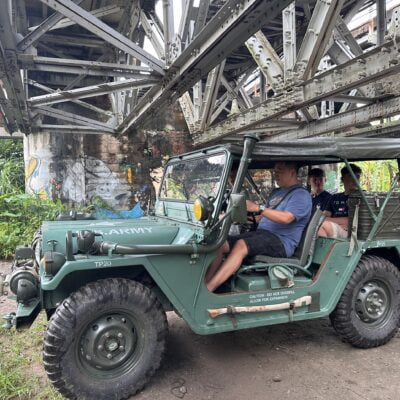
Hanoi Jeep Tours Led By Women
Hanoi Bicycle Tours Led By Women
Private & Small-Group Experiences
The contact information above is taken from the official Motorbike City Tours website.
Taste Hanoi beyond the famous dishes—ride through local streets, discover hidden food spots and experience Vietnamese street food with local women leading the way.