Vietnamese Food for First-Time Visitors: What Should You Order?
Vietnamese food can feel overwhelming when you first arrive. There are noodle soups, rice dishes, grilled meats, sandwiches, steamed rice cakes, fresh rolls, desserts, tropical fruit and dozens of kinds of coffee. Many dishes have unfamiliar Vietnamese names, while the same dish can taste quite different depending on the region.
The good news is that you do not need to understand the entire cuisine before your first meal. A small list of classic dishes will give you a strong introduction to Vietnamese food, and you can gradually move into more regional and adventurous choices. Vietnam’s official culinary guide highlights this regional diversity: Northern food is generally more restrained, Central cuisine tends to be stronger and spicier, while Southern cooking often uses sweeter flavors.
For a first trip, start with phở, bánh mì, bún chả, bánh cuốn and Vietnamese coffee. Then add regional specialties such as bún bò Huế, cao lầu, mì Quảng, cơm tấm and hủ tiếu as you travel. This approach lets you experience both the most recognizable Vietnamese dishes and the flavors that make each region different.
What Should First-Time Visitors Eat in Vietnam?
There is no single correct order, but a practical food journey looks like this: phở for breakfast, bánh mì as a quick snack, bún chả for lunch in Hanoi, Vietnamese coffee in the afternoon and a regional specialty for dinner.
Don’t try to eat ten heavy dishes in one day. Vietnamese food is much more enjoyable when you try smaller portions and leave room for another stop.
1. Phở Bò
If you eat only one Vietnamese dish on your first trip, make it phở bò.
This famous beef noodle soup combines flat rice noodles with sliced beef, herbs and a deeply flavored broth. Hanoi’s traditional version is particularly associated with a clear broth and restrained seasoning, while Southern versions often come with more herbs, bean sprouts and additional condiments.
The best time to order phở is breakfast. Many local phở shops are busiest early in the morning, and that is when you can experience the dish in its most natural setting.
First-time tip: Taste the broth before adding lime, chili or sauces.
2. Phở Gà
Phở gà is the chicken version of phở and is often slightly lighter than beef phở.
It is an excellent choice for travelers who prefer chicken or want a gentler introduction to Vietnamese noodle soups.
Best time: Breakfast.
Best place: Hanoi and Northern Vietnam.
3. Bánh Mì
Bánh mì is one of the easiest Vietnamese foods for first-time visitors to understand. A crisp baguette is filled with combinations of pâté, meat, Vietnamese sausage, cucumber, pickled vegetables, herbs and sauces.
There are hundreds of regional variations, so don’t assume that one bánh mì represents the entire country. Vietnam’s official food guide describes bánh mì as a dish that has been reinvented in different parts of the country.
First-time tip: Order one from a busy local shop and eat it while the bread is still warm and crisp.
4. Bún Chả
If you’re visiting Hanoi, bún chả should be near the top of your list.
The dish combines charcoal-grilled pork patties and sliced pork belly with rice vermicelli, fresh herbs and a fish-sauce-based dipping broth. It is traditionally associated with lunchtime in Hanoi.
The combination of smoky pork, fresh herbs and tangy-sweet sauce gives you a very different experience from phở.
Best place: Hanoi.
Best time: Lunch.
5. Bánh Cuốn
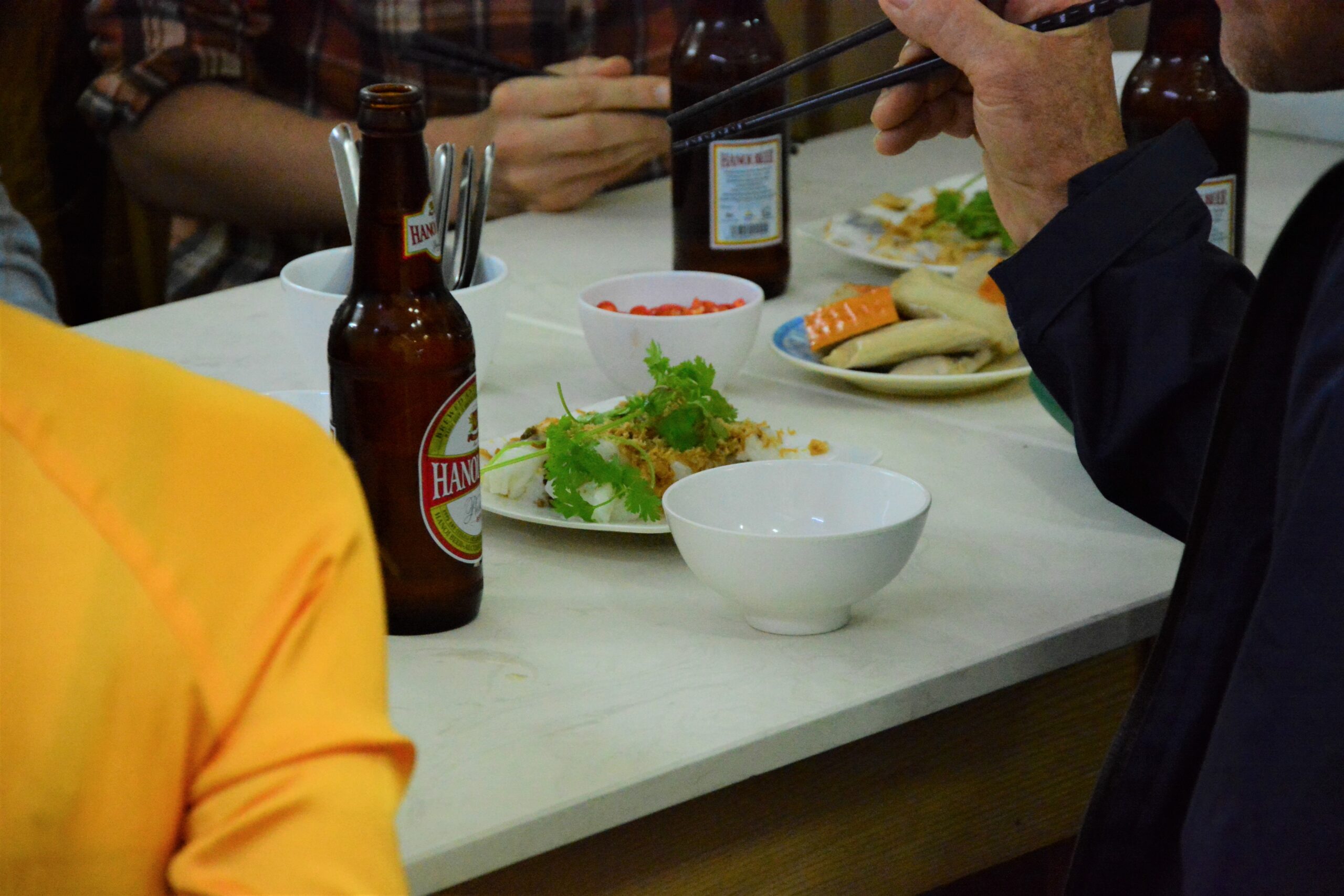
Bánh cuốn consists of thin steamed rice sheets filled with ingredients such as minced pork and wood-ear mushroom, then served with herbs, fried shallots and dipping sauce.
The most interesting part is often watching it being made. The rice batter is spread over a steaming cloth, cooked very quickly and rolled while still soft.
Best place: Hanoi and Northern Vietnam.
Best time: Breakfast or morning.
6. Chả Cá
Chả cá is one of Hanoi’s signature specialties. Marinated fish is cooked with dill and spring onions and usually served with noodles, herbs and peanuts.
This is a particularly good dish for travelers who want something beyond the standard noodle soup.
Best place: Hanoi.
Best time: Lunch or dinner.
7. Bún Đậu Mắm Tôm
Bún đậu mắm tôm combines rice vermicelli, fried tofu and fresh herbs, often with pork and fermented shrimp paste.
The mắm tôm is strong and pungent. It is perfectly normal for a first-time visitor to find it unusual.
First-time tip: Try a very small amount of the shrimp paste first. Ask for another dipping sauce if the flavor is too intense.
8. Phở Cuốn
Phở cuốn uses soft rice sheets wrapped around beef, vegetables and herbs, served with dipping sauce.
It is lighter than a bowl of phở and easy to share, making it a good option when you want to try several foods in one meal.
Best place: Hanoi.
9. Bún Ốc
Bún ốc is a traditional Hanoi noodle dish with freshwater snails, rice vermicelli and a flavorful broth often containing tomato and sour elements.
This is a good second-stage dish. Try it after the classics if you want to explore more traditional Northern cuisine.
10. Bún Thang
Bún thang is another Hanoi specialty, made with rice vermicelli and finely prepared ingredients such as chicken, Vietnamese ham and omelet in a delicate broth.
It is less famous internationally than phở, which makes it especially interesting for travelers who want to go beyond the obvious choices.
11. Bún Bò Huế
When you reach Hue, change your food strategy and try bún bò Huế.
This Central Vietnamese noodle soup has a stronger, more aromatic broth, often featuring lemongrass and chili. It is quite different from Northern phở.
Vietnam’s official food guide highlights bún bò Huế as one of the defining specialties of Central Vietnam.
Best place: Hue.
12. Mì Quảng
Mì Quảng is associated with Central Vietnam, particularly Quang Nam and Da Nang.
It uses broad rice noodles, a small amount of concentrated broth, meat or seafood, herbs, peanuts and crispy rice crackers. Unlike phở, it is not a bowl dominated by broth.
Best place: Da Nang and Quang Nam.
13. Cao Lầu
Cao lầu is one of Hoi An’s signature dishes. Thick noodles are served with pork, herbs, greens and crispy pieces.
It has a distinctive texture and is closely tied to Hoi An’s culinary identity.
Best place: Hoi An.
14. Cơm Gà Hội An
Cơm gà Hội An combines fragrant rice, shredded chicken, herbs, pickled vegetables and a savory dressing.
For travelers who have eaten several noodle dishes already, this is an excellent way to change the texture and style of your meal.
Best place: Hoi An.
15. Cơm Tấm
Once you reach Ho Chi Minh City, try cơm tấm, or broken rice.
A classic plate usually includes grilled pork, egg, vegetables and fish sauce. It is filling, smoky and distinctly Southern.
This is one of the dishes that clearly demonstrates how Vietnamese food changes from North to South.
16. Hủ Tiếu
Hủ tiếu is another important Southern food. It can include pork, shrimp, seafood and noodles, and it may be served with broth or as a dry noodle dish.
Try it in Ho Chi Minh City or the Mekong Delta.
17. Bánh Xèo
Bánh xèo is a crispy Vietnamese savory pancake usually filled with pork, shrimp and bean sprouts.
You tear off pieces, wrap them in lettuce and fresh herbs and dip them into sauce.
The Southern style is often larger and especially crispy, while Central versions can be smaller and different in texture.
18. Gỏi Cuốn
Gỏi cuốn, or fresh spring rolls, are made with rice paper, shrimp or pork, noodles, lettuce and herbs.
They are light, fresh and easy for first-time visitors because you can clearly see what is inside.
They also make a good alternative when you don’t want another fried dish.
19. Nem Rán / Chả Giò
Fried spring rolls are called nem rán in the North and are commonly called chả giò in the South.
The fillings vary between regions, but pork, vegetables, mushrooms and noodles are common.
Try both versions during a longer Vietnam trip and compare the differences.
20. Chè
Chè refers to a broad family of Vietnamese sweet desserts and sweet soups. Ingredients can include beans, coconut milk, jelly, fruit and glutinous rice.
This is one of the easiest Vietnamese desserts for first-time visitors because you can usually choose from several different combinations.
Best time: Afternoon or evening.
21. Vietnamese Egg Coffee
For first-time visitors to Hanoi, egg coffee is a must-try.
Strong coffee is topped with a creamy mixture made from egg yolk and sugar. The result is rich, sweet and almost dessert-like.
Egg coffee is closely associated with Hanoi and its old café culture.
First-time tip: Don’t drink it too quickly. Let the creamy topping mix with the coffee underneath.
22. Vietnamese Iced Coffee
Cà phê sữa đá is strong Vietnamese coffee mixed with sweetened condensed milk and ice.
If egg coffee feels too unusual, start here.
It is one of the simplest drinks for understanding Vietnamese café culture.
23. Coconut Coffee
Cà phê dừa, or coconut coffee, combines coffee with coconut cream, coconut milk or a frozen coconut mixture.
It is sweet, creamy and refreshing, especially on hot afternoons.
This is more common in modern cafés than the most traditional sidewalk coffee shops.
24. Fresh Tropical Fruit
Vietnam is an excellent place to try fruit you may rarely see at home.
Depending on the season, look for mangosteen, rambutan, longan, pomelo, dragon fruit, mango and jackfruit.
A local market is usually more interesting than buying pre-packaged fruit in a supermarket.
25. Grilled Seafood
If your Vietnam itinerary includes coastal destinations, make room for grilled squid, prawns, clams, crab and local fish.
Seafood quality varies by destination, but coastal cities and markets are excellent places to explore it.
26. Cá Kho Tộ
Cá kho tộ is fish slowly braised in a clay pot with ingredients such as fish sauce, sugar and pepper.
It is rich, savory and slightly sweet and usually served with steamed rice and vegetables.
This is more of a family-style meal than street food and provides a good introduction to home cooking.
27. Canh Chua
Canh chua is a sweet-and-sour soup particularly associated with Southern Vietnam.
Fish, pineapple, tomatoes, bean sprouts and herbs may be combined in the broth.
The sourness makes it especially refreshing in hot weather.
28. Nem Nướng
Nem nướng is grilled Vietnamese pork sausage or meatball, particularly popular in Central and Southern Vietnam.
It is commonly eaten with rice paper, herbs and dipping sauce.
Nha Trang is especially well known for its local version.
29. Xôi
Xôi is Vietnamese sticky rice and can be savory or sweet.
Savory versions can include pork, sausage and fried shallots, while sweet versions may contain mung beans, corn, coconut or peanuts.
It is an inexpensive and filling breakfast.
30. Vietnamese Yogurt
Sữa chua, or Vietnamese yogurt, is a simple dessert or snack that works well after a heavy meal.
Some versions are particularly creamy and tangy, while modern cafés may combine yogurt with fruit or coffee.
What Should You Order First in Vietnam?
For a first-time traveler, I recommend this order:
Day 1 in Hanoi: Phở bò + Vietnamese coffee.
Day 2 in Hanoi: Bánh cuốn + bún chả + egg coffee.
Hue: Bún bò Huế + bánh bèo.
Hoi An: Cao lầu + mì Quảng or cơm gà.
Ho Chi Minh City: Cơm tấm + bánh xèo + hủ tiếu.
This gives you a broad introduction without repeating the same style of food every day.
What Should You Eat in Hanoi First?
Start with phở, bún chả, bánh cuốn, chả cá and egg coffee.
Once you’ve tried these, move into bún ốc, bún thang, phở cuốn and bún đậu mắm tôm.
Hanoi is particularly good for travelers who enjoy traditional Northern cuisine and street food in compact neighborhoods.
What Should You Eat in Hue First?
Start with bún bò Huế, then try bánh bèo, bánh nậm and bánh bột lọc.
Hue is ideal for travelers who want to explore small Central Vietnamese dishes rather than eating only large noodle bowls.
What Should You Eat in Hoi An First?
Order cao lầu, then try mì Quảng and cơm gà Hội An.
Because Hoi An’s historic center is compact, you can combine food with a walking tour through the old streets.
What Should You Eat in Ho Chi Minh City First?
Start with cơm tấm, hủ tiếu and bánh xèo.
Then explore chả giò, Southern desserts, Vietnamese iced coffee and tropical fruit.
What Should First-Time Visitors Eat for Breakfast?
Start with phở, phở gà, bánh cuốn or xôi.
Vietnamese breakfast is an important cultural experience because many vendors specialize in morning food and operate according to local meal times.
The official Vietnamese food guide notes that phở is commonly eaten for breakfast, despite many international travelers assuming it is primarily a lunch or dinner dish.
What Should First-Time Visitors Eat for Lunch?
In Hanoi, choose bún chả.
In Central Vietnam, try mì Quảng or bún bò Huế.
In the South, choose cơm tấm or hủ tiếu.
Matching your lunch to the local region is one of the easiest ways to make your Vietnam food experience more authentic.
What Should First-Time Visitors Eat for Dinner?
Dinner is the best time for shared dishes.
Try chả cá, grilled seafood, bánh xèo, cá kho tộ, hot pot or several smaller street-food dishes.
Vietnamese meals often work better when you order several dishes for the table rather than one large plate per person.
What If You Don’t Like Spicy Food?
Don’t worry. Many famous Vietnamese dishes are not particularly spicy.
Start with phở, bún chả, bánh cuốn, cơm tấm or gỏi cuốn.
Tell your guide or restaurant that you prefer little or no chili. Fresh chili and sauces are often served separately.
What If You Don’t Like Fish Sauce?
Fish sauce is an important ingredient in Vietnamese cooking, but you don’t necessarily have to eat it directly.
Some dishes use fish sauce in the cooking process while others are served with a separate dipping sauce.
If you strongly dislike fish sauce, tell the restaurant or guide in advance so suitable choices can be made.
What If You Don’t Like Fermented Foods?
Avoid or approach mắm tôm and other strongly fermented sauces carefully.
Start with dishes such as phở, bánh mì, bún chả, bánh cuốn and fresh spring rolls before trying fermented specialties.
What Should Vegetarians Order?
Good starting choices include vegetarian phở, tofu dishes, vegetarian bánh mì, vegetable rice dishes, fresh spring rolls without meat and vegetarian noodles.
Be careful with broths and sauces because fish sauce, shrimp paste and meat stock can appear in dishes that otherwise look vegetarian.
What Should Children Order?
For children, start with:
Phở gà, bánh mì, grilled chicken, steamed rice, gỏi cuốn and fresh fruit.
Older children can gradually try bún chả, bánh xèo, Vietnamese desserts and egg coffee.
Is Vietnamese Street Food Safe for First-Time Visitors?
Use common-sense food precautions. Choose places with steady customer traffic, fresh ingredients and food that is cooked thoroughly.
A busy local food stall is often a good sign because ingredients are being used continuously.
A local guide can also help you choose established food stops and explain unfamiliar ingredients.
How Much Food Should You Order?
Don’t order too much at the beginning.
Vietnamese food is often served in portions that can be shared, and trying several small dishes is usually more enjoyable than ordering a huge plate of one unfamiliar food.
This is particularly important on food tours.
What Should You Drink With Vietnamese Food?
Start with Vietnamese iced coffee, black phin coffee or tea.
For a refreshing non-coffee option, fresh fruit juice is widely available.
At the end of a food-heavy evening, try egg coffee or chè as dessert.
How to Order Food Without Speaking Vietnamese
You can use a translation app, point at dishes being prepared or ask your guide for help.
A few useful phrases are enough for basic communication:
Không cay – not spicy.
Ít cay – less spicy.
Không hành – no onion.
Không thịt – no meat.
For serious allergies or dietary restrictions, communicate them clearly before ordering.
Hanoi Food Tours for First-Time Visitors
A Hanoi food tour can be one of the easiest ways to understand Vietnamese cuisine quickly. Instead of trying to identify restaurants on your own, you can visit several carefully selected food stops in one evening.
A good itinerary might combine phở cuốn, bún chả, bánh cuốn, Vietnamese coffee, chè and egg coffee, with walking or motorbike travel between neighborhoods.
Hanoi Food Tours Led by Women
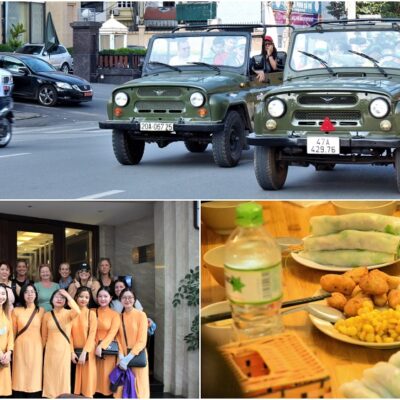
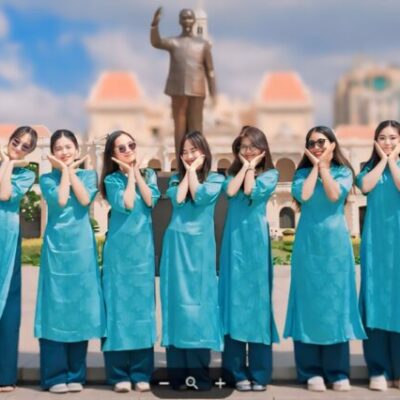
A Hanoi Food Tour Led by Women offers first-time visitors a local introduction to Northern Vietnamese food with professional female guides.
The experience is suitable for couples, families, solo travelers and mixed groups. The emphasis is on discovering food and the neighborhoods where local people actually eat, rather than simply visiting famous restaurants.
Hanoi Food Tours by Motorbike
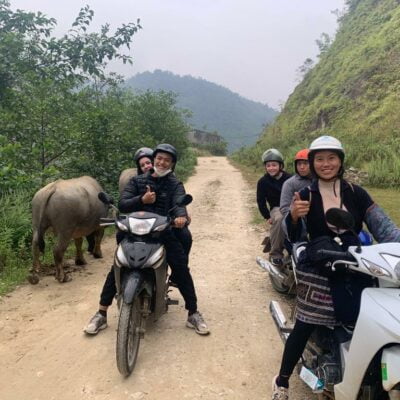
For first-time visitors who want both food and sightseeing, a Hanoi Food Tour by Motorbike is particularly practical.
You can ride between different neighborhoods, stop for local dishes and experience Hanoi’s streets between food stops. As a passenger, you can focus on eating and sightseeing instead of navigating traffic.
A Perfect First-Day Food Itinerary in Hanoi
7:30 AM: Phở bò.
9:00 AM: Vietnamese black coffee.
10:00 AM: Walk around Hoan Kiem Lake and the Old Quarter.
12:00 PM: Bún chả.
3:00 PM: Bánh cuốn or phở cuốn.
6:30 PM: Chả cá or another local dinner.
8:30 PM: Egg coffee or chè.
This gives you a broad introduction without overwhelming your appetite.
A Perfect First Week of Vietnamese Food
Days 1–3: Hanoi — phở, bún chả, bánh cuốn, chả cá, bún đậu and egg coffee.
Day 4: Hue — bún bò Huế and Central Vietnamese bánh.
Days 5–6: Hoi An — cao lầu, mì Quảng and cơm gà.
Day 7: Ho Chi Minh City — cơm tấm, hủ tiếu and bánh xèo.
This is an excellent starting framework for someone who wants to understand Vietnam through food.
What Not to Do on Your First Food Day
Don’t try every famous dish at once.
Don’t eat five bowls of noodles in one afternoon.
Don’t assume every dish labeled “Vietnamese” tastes the same.
Don’t avoid street food entirely.
And don’t judge a dish before trying it the way locals traditionally eat it.
Final Thoughts
For first-time visitors, Vietnamese food is much easier to understand when you approach it one region at a time.
Start in Hanoi with phở, bún chả, bánh cuốn and egg coffee. Continue to Hue for bún bò Huế, then Hoi An for cao lầu and mì Quảng, and finally head south for cơm tấm, hủ tiếu and bánh xèo. This lets you experience the country’s culinary differences instead of treating Vietnamese food as one single style.
You don’t need to become an expert in Vietnamese cuisine before arriving. Just remember a few essentials: eat where local people eat, try dishes at their traditional meal times, order small portions when exploring, ask about unfamiliar ingredients and leave room for coffee and dessert.
Start with the classics, then become more adventurous. One bowl of phở can lead to an entire culinary journey across Vietnam.
Discover Vietnamese Food With Motorbike City Tours – Led by Women
For first-time visitors who want to experience Hanoi food without spending hours researching restaurants, a Hanoi Food Tour Led by Women can combine local dishes with sightseeing and neighborhood exploration.
A women-led food experience can introduce travelers to phở, bún chả, bánh cuốn, chả cá, phở cuốn, Vietnamese coffee and local desserts, while a motorbike format makes it possible to move between different food areas during the same outing.
The official Motorbike City Tours website currently presents women-led Hanoi motorbike and food experiences, including dedicated foodie motorbike tours and city sightseeing experiences.
Contact Motorbike City Tours
MOTORBIKE CITY TOURS
Address: 91 Tho Nhuom Street, Hoan Kiem District, Hanoi, Vietnam
Phone / WhatsApp 24/7: +84 988 402 008
Email: info@motorbikecitytours.com
Website: motorbikecitytours.com
Hanoi Food Tours Led By Women
Hanoi Motorbike Tours Led By Women
Hanoi Vespa Tours Led By Women
Hanoi Jeep Tours Led By Women
Hanoi Bicycle Tours Led By Women
Private & Small-Group Experiences
The contact information above is taken from the official Motorbike City Tours website.
Taste Vietnam one dish at a time, start with the classics and let local women guides introduce you to the food, streets and everyday life behind each dish.