Sapa Full-Day Private Car Tour – Fansipan Cable Car, O Quy Ho Pass, Lao Chai & Ta Van Led by Women
Experience the dramatic mountain landscapes and living cultures of northern Vietnam on a Sapa Full-Day Private Car Tour – Fansipan, O Quy Ho Pass, Muong Hoa Valley & Lao Chai Led by Women.
This private full-day journey takes you beyond the busy streets of Sapa into the high mountain landscape surrounding the town.
Travel from Sapa to Fansipan, continue along O Quy Ho Pass, descend toward the Muong Hoa Valley, and explore the villages of Lao Chai and Ta Van where Black Hmong and Dzay communities continue traditional ways of life.
Rather than treating Sapa as simply a mountain viewpoint, this experience connects its highest peak, spectacular mountain roads, terraced rice fields and ethnic villages into one complete journey.
With Vietnam Women Travel – Premium Private Tours Led by Women, you travel by private car with a Vietnamese female guide who introduces the landscapes, cultures, food and stories behind the destinations.
A Different Way to Discover Sapa
Sapa is often presented through three images: Fansipan, rice terraces and ethnic villages.
But the real character of the region appears when these landscapes are experienced together.
The mountains determine where people live.
The valleys provide agricultural land.
The terraces transform steep slopes into productive fields.
The villages preserve distinctive languages, clothing, crafts and traditions.
This private car tour follows that relationship from the summit of Fansipan to the farming communities of Muong Hoa Valley.
Why Choose a Private Car in Sapa?
The landscapes around Sapa are spread across steep mountain roads and deep valleys.
A private car allows you to travel comfortably between viewpoints, cable car stations and villages without having to follow a large-group timetable.
It is particularly useful for a full-day itinerary because you can combine high-altitude scenery with rural exploration.
Your female guide can also adjust the route according to weather, visibility and your interests.
If the mountains are clear, spend more time at viewpoints.
If the rice terraces are especially beautiful, stop for photographs.
If you enjoy village culture, spend longer walking around Lao Chai or Ta Van.
Sapa Full-Day Private Car Tour Itinerary
Part 1: Fansipan – Vietnam’s Highest Mountain & Hoang Lien Son Views
Begin your private car tour with hotel pickup in Sapa.
Travel toward the Fansipan cable car station and begin your journey toward the summit of Fansipan, the highest mountain in Vietnam.
The cable car provides dramatic views across the Hoang Lien Son mountain range.
As the cabin rises above the valleys, the landscape changes from forested slopes to steep mountain ridges and cloud-covered peaks.
At the upper station, continue exploring the summit area and take time to experience the mountain atmosphere.
On clear days, panoramic views stretch across the surrounding northern highlands.
Your female guide explains the geographical importance of Fansipan and the Hoang Lien Son range.
The summit experience provides a high-altitude introduction to the region before you descend toward the valleys and villages below.
Part 2: O Quy Ho Pass – Heaven’s Gate, Mountain Roads & Northern Highlands
Return to the private car and continue toward O Quy Ho Pass, one of the most spectacular mountain roads in northern Vietnam.
The road climbs through the Hoang Lien Son landscape with increasingly dramatic views.
Stop at O Quy Ho Heaven Gate when weather and visibility are suitable.
From the viewpoint, look across the mountains and valleys below.
Your female guide explains how O Quy Ho Pass connects Sapa with Lai Chau and why the road has long been an important route through the northern mountains.
The landscape changes constantly as clouds move across the peaks.
Take photographs, enjoy the cool mountain air and continue toward the Muong Hoa region.
This section of the journey is about the road itself as much as the destination.
Part 3: Muong Hoa Valley – Terraced Rice Fields & Mountain Communities
Descend toward the spectacular Muong Hoa Valley.
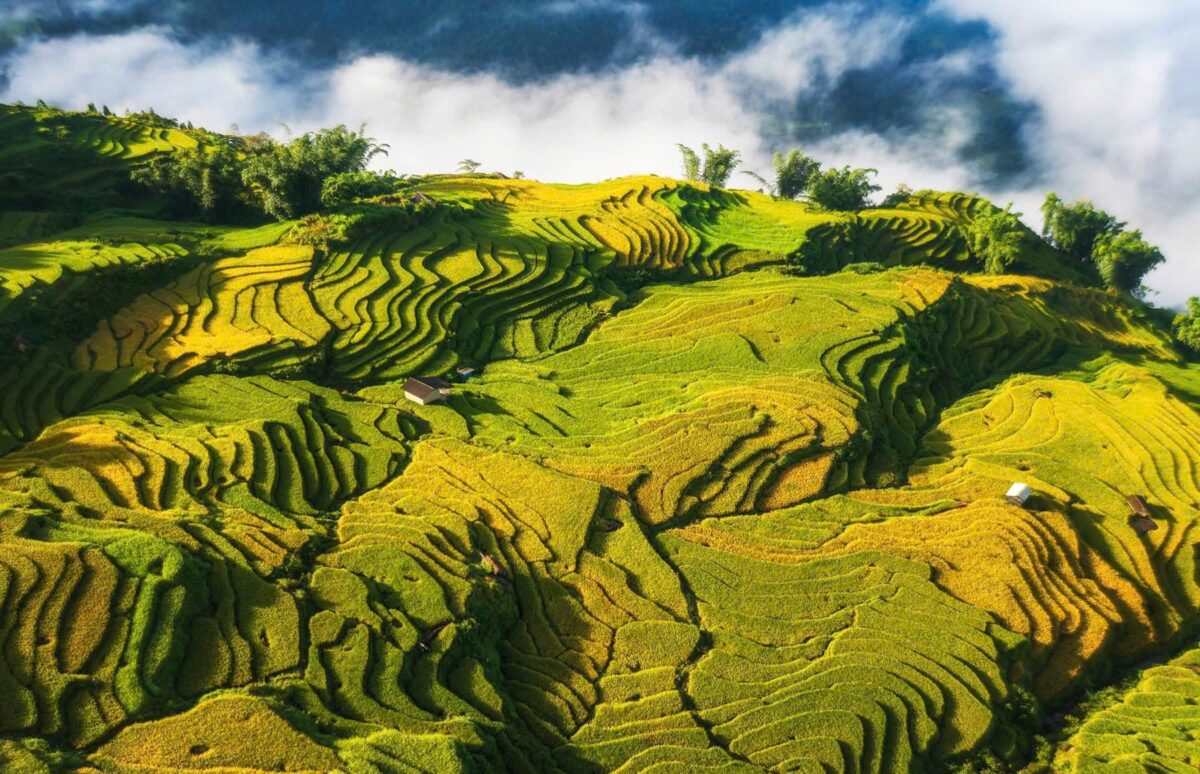
The valley is surrounded by steep mountains and famous for its extensive terraced rice fields.
Stop at carefully selected viewpoints where you can see terraces flowing across the slopes.
The appearance of the valley changes dramatically with the agricultural calendar.
During planting season, the terraces may contain water reflecting the sky.
During the growing season, the slopes become green.
Around harvest time, the fields develop golden colors.
Your female guide explains how generations of farmers have adapted agriculture to the steep terrain.
The terraces are not simply scenic attractions.
They are working agricultural landscapes created and maintained by local communities.
Continue toward the villages at the heart of the valley.
Part 4: Lao Chai Village – Black Hmong Culture, Crafts & Mountain Life
Continue to Lao Chai Village, home to a large Black Hmong community.
Leave the main road and explore the village environment at a relaxed pace.
See traditional houses, gardens, agricultural areas and small family businesses.
Your female guide introduces aspects of Black Hmong culture and explains how local families combine farming, handicrafts and tourism.
Depending on the season, you may see villagers working in rice fields, preparing crops, caring for livestock or producing traditional textiles.
Learn about traditional Hmong clothing and handicrafts when local artisans are available.
This section is designed as a cultural encounter rather than a staged performance.
The focus is on observing real village life respectfully.
Enjoy a local lunch featuring northern Vietnamese dishes and ingredients from the surrounding communities.
Part 5: Ta Van Village – Dzay Culture, Riverside Paths & Return to Sapa
After lunch, continue toward Ta Van Village, located deeper within the Muong Hoa Valley.
Ta Van is associated particularly with the Dzay community and offers a different cultural environment from Lao Chai.
Walk through village lanes and along sections of the valley where houses, rice terraces, streams and gardens come together.
Your female guide explains differences in architecture, clothing, farming practices and local traditions.
Take time beside the stream or in a quiet village area to enjoy the landscape.
The final section is deliberately relaxed.
Instead of rushing through another list of attractions, spend time observing the valley and local surroundings.
Return to the private car and begin the journey back toward Sapa.
Finish at your hotel in the late afternoon or early evening.
Fansipan – Above the Clouds
Fansipan is the highest mountain in Vietnam and one of the defining landmarks of the northern highlands.
The mountain forms part of the Hoang Lien Son range, a dramatic mountainous system that shapes the geography of Sapa.
The cable car journey provides an opportunity to appreciate the scale of the landscape from above.
From the summit area, weather conditions can change quickly.
Clouds can move across the mountain within minutes, creating completely different views throughout the day.
Your female guide can help you understand the mountain’s geographical and cultural importance while allowing you time to enjoy the summit.
O Quy Ho Pass – One of Northern Vietnam’s Great Mountain Roads
O Quy Ho Pass connects the Sapa area with Lai Chau and crosses the Hoang Lien Son range.
The road is famous for its steep mountain scenery, dramatic bends and changing weather.
At viewpoints around Heaven Gate, you can see deep valleys and distant mountain ridges.
The road is also a valuable part of the cultural landscape because it connects communities on different sides of the mountain range.
Traveling by private car allows you to stop at suitable viewpoints rather than simply passing through.
Muong Hoa Valley – Where Rice Terraces Shape the Landscape
The Muong Hoa Valley is one of the most recognizable landscapes in Sapa.
Its terraces demonstrate how local communities have transformed steep mountain slopes into productive farmland.
The terraces require knowledge, maintenance and cooperation.
Water must be managed carefully.
Fields need to be prepared according to seasonal conditions.
Harvesting is often a community effort.
Your guide explains these agricultural traditions while you travel through the valley.
This makes the scenery more meaningful.
You are not simply looking at rice terraces.
You are seeing the result of generations of local knowledge.
Lao Chai – Black Hmong Mountain Culture
Lao Chai Village is one of the best places around Sapa to experience Black Hmong culture.
The community has maintained distinctive traditions in clothing, handicrafts, farming and family life.
Traditional textiles are particularly important.
Local women have historically played a central role in textile production and embroidery.
Your female guide can introduce these traditions while explaining how modern tourism has affected village life.
The goal is to experience the community respectfully and support locally owned businesses when possible.
Ta Van – Dzay Village Life in the Muong Hoa Valley
Ta Van Village offers a different cultural perspective.
The Dzay people have their own traditions, architecture and agricultural practices.
The village’s position within the Muong Hoa Valley creates a beautiful combination of houses, streams, rice terraces and mountain slopes.
Walk through the village and observe how homes are positioned around the valley.
Your guide explains local customs and the relationship between the community and its environment.
The quieter atmosphere makes Ta Van an excellent final village experience before returning to Sapa.
Sapa’s Mountain Food
Food is another way to understand the northern highlands.
Local cuisine is shaped by the climate, agricultural conditions and ethnic communities.
Depending on the restaurant and season, your meal may include:
- Mountain vegetables
- Local herbs
- Grilled pork
- Free-range chicken
- Fresh river fish
- Bamboo-cooked dishes
- Rice and regional specialties
- Hmong-inspired local dishes
Your female guide can explain which ingredients are locally grown and how different communities prepare their food.
The emphasis is on authentic regional cuisine rather than generic tourist menus.
The Women Behind Sapa’s Mountain Communities
Women play an important role in the cultural and economic life of many villages around Sapa.
They are often involved in farming, textile production, embroidery, family businesses and hospitality.
This makes a women-led tour particularly meaningful in the region.
Through Vietnam Women Travel – Premium Private Tours Led by Women, travelers can gain a more personal understanding of the work and traditions of women in northern Vietnam’s ethnic communities.
The tour is not a performance.
It is a private opportunity to learn, observe and support local communities.
Why This Sapa Private Car Tour Is Different
This itinerary is not simply a combination of the most famous Sapa attractions.
It follows the geography of the region:
Sapa → Fansipan → O Quy Ho Pass → Heaven Gate → Muong Hoa Valley → Lao Chai → Ta Van → Sapa.
You experience:
- Fansipan
- Hoang Lien Son mountains
- O Quy Ho Pass
- O Quy Ho Heaven Gate
- Muong Hoa Valley
- Rice terraces
- Lao Chai Village
- Black Hmong culture
- Ta Van Village
- Dzay culture
- Mountain cuisine
- Rural landscapes
- Private women-led guiding
The journey moves from Vietnam’s highest peak into the agricultural valleys and communities below.
Vietnam Women Travel – Premium Private Tours Led by Women
Vietnam Women Travel – Premium Private Tours Led by Women creates private journeys designed around authentic destinations, local knowledge and personal service.
Our experiences are private tours led by women, not women-only tours.
Your Vietnamese female guide accompanies your private group throughout the day and helps you understand the geography, cultures and traditions of northern Vietnam.
The private format means your itinerary can remain flexible.
Spend more time at Fansipan if the weather is clear.
Stop longer at O Quy Ho for photography.
Walk farther into Lao Chai.
Spend more time meeting local artisans.
Or simply enjoy the mountain scenery from the comfort of your private car.
Who Is This Sapa Private Car Tour For?
This experience is ideal for:
- First-time visitors to Sapa
- Couples looking for a private mountain adventure
- Families traveling comfortably
- Photography enthusiasts
- Travelers interested in ethnic cultures
- Guests fascinated by rice terraces
- Travelers who want to visit Fansipan
- Visitors interested in Black Hmong and Dzay communities
- Food lovers
- Travelers looking for private tours led by women
Book Your Sapa Full-Day Private Car Tour
If you are searching for a Sapa private car tour, Fansipan private tour, O Quy Ho Pass tour, Muong Hoa Valley private tour, or a full-day experience combining mountain scenery with ethnic village life, this women-led journey offers a deeper way to discover northern Vietnam.
Travel from Sapa to Fansipan, cross the spectacular O Quy Ho Pass, admire the terraced landscapes of Muong Hoa Valley, meet the communities of Lao Chai and Ta Van, and discover the traditions that make the Sapa region unique.
With Vietnam Women Travel – Premium Private Tours Led by Women, your journey is private, comfortable and guided by a Vietnamese woman who connects the dramatic mountain scenery with the people who have shaped this landscape for generations.
From the summit of Fansipan to the rice terraces of Muong Hoa, experience Sapa through its mountains, villages, food and living cultures.