Hue Full-Day Private Car Tour – Imperial City, Thien Mu Pagoda, Bao Vinh & Local Culture Led by Women
Experience Hue through its royal heritage, Buddhist traditions, ancient river communities and everyday food culture on a Hue Full-Day Private Car Tour – Imperial City, Thien Mu Pagoda, Bao Vinh & Local Culture Led by Women.
This private full-day journey is designed for travelers who want to understand Hue as more than an imperial city.
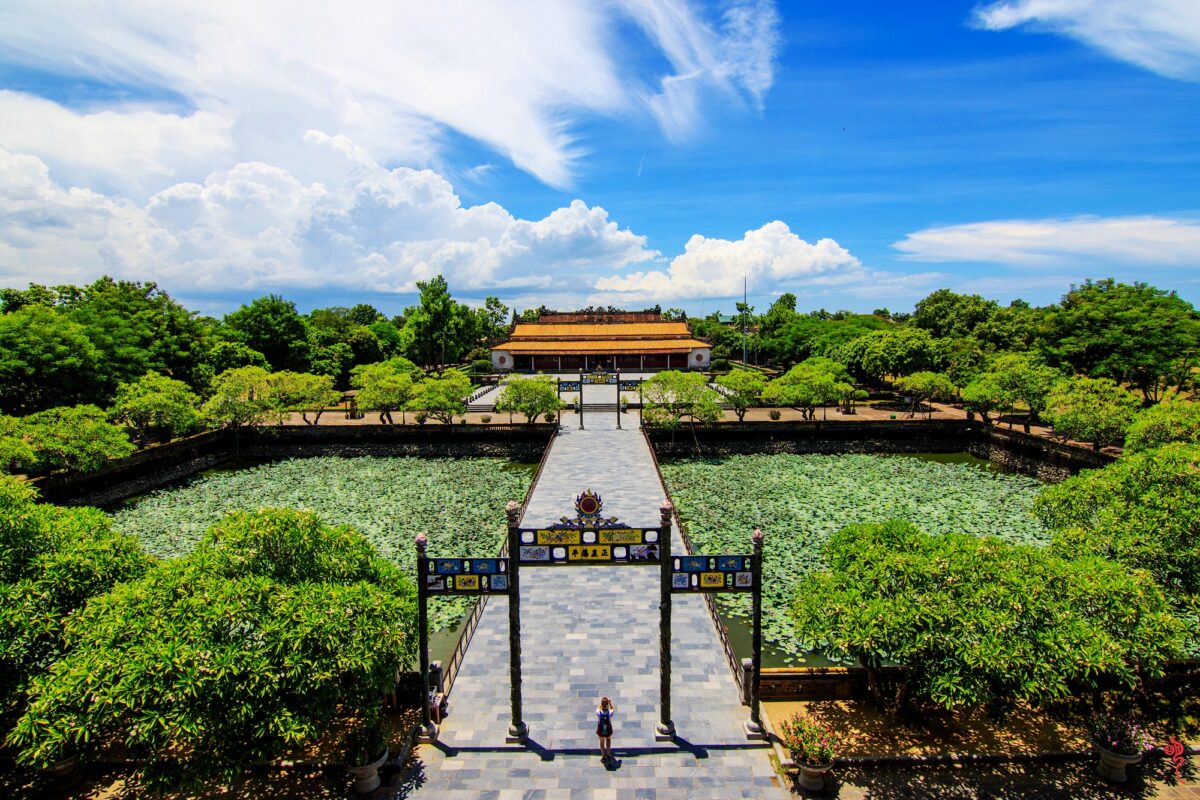
Begin inside the Hue Imperial City, where the Nguyen Dynasty ruled Vietnam for more than a century.
Then follow the Perfume River toward Thien Mu Pagoda, continue into the historic riverside community of Bao Vinh, explore Dong Ba Market, visit the peaceful grounds of Tu Duc Tomb, and finish with authentic Hue cuisine.
The route connects royal history with religious heritage, traditional commerce and ordinary family life.
With Vietnam Women Travel – Premium Private Tours Led by Women, you travel comfortably by private car with a Vietnamese female guide who brings the stories behind Hue’s landmarks and communities to life.
Hue Is More Than the Imperial City
The story of Hue cannot be understood through the Citadel alone.
The Nguyen emperors built their capital around the Perfume River, while temples, markets, craft communities and villages developed alongside the royal center.
The river connected the city with surrounding communities.
Markets supplied food and goods.
Pagodas became important spiritual centers.
Villages supported agriculture and traditional crafts.
This private car tour brings these different layers together.
You experience the grand scale of imperial Hue and then move into smaller communities where local traditions continue today.
Why Choose a Private Car for Exploring Hue?
Hue’s major cultural sites are spread across the city and surrounding countryside.
A private car provides a comfortable way to connect them without wasting time navigating unfamiliar roads or waiting for group transportation.
You can also travel between sites in comfort during the warmer parts of the day.
The private format means there is no fixed group schedule.
If you enjoy history, spend longer at the Imperial City.
If you love photography, take more time beside the Perfume River.
If food interests you, explore Dong Ba Market with your guide.
If you prefer a slower day, the itinerary can be adjusted accordingly.
Hue Full-Day Private Car Tour Itinerary
Part 1: Hue Imperial City – The Nguyen Dynasty Capital
Begin your private car tour with hotel pickup in Hue.
Travel to the Hue Imperial City, the former political and ceremonial center of the Nguyen Dynasty.
Enter through the historic gates and explore selected areas of the vast Citadel complex.
Your female guide introduces the origins of the Nguyen Dynasty and explains how Hue became Vietnam’s imperial capital.
Walk through courtyards, ceremonial spaces and palace areas while learning about royal life, court traditions and imperial architecture.
Rather than rushing through every structure, focus on the parts of the complex that best explain how the royal city functioned.
Your guide also explains the symbolism found in architectural details and decorative motifs.
After exploring the Imperial City, return to the private car and continue toward the Perfume River.
Part 2: Thien Mu Pagoda – Buddhism, River Views & Hue’s Spiritual Heritage
Drive along the Perfume River toward Thien Mu Pagoda, one of Hue’s most recognizable religious landmarks.
The pagoda occupies a peaceful location overlooking the river and has been associated with Hue’s Buddhist traditions for centuries.
Explore the pagoda grounds and learn about its history and significance.
Your female guide explains the role of Buddhism in Vietnamese family and community life and how religious traditions became intertwined with the cultural identity of Hue.
Take time to walk through the gardens and enjoy the river views.
The atmosphere here contrasts strongly with the formal architecture of the Imperial City.
One represents political power.
The other reflects spiritual life.
Part 3: Bao Vinh Ancient Village – Old River Trade & Traditional Hue
Continue by private car toward Bao Vinh Ancient Village, a historic riverside community north of central Hue.
Bao Vinh was once connected with the commercial life of the region and developed as a trading area along the waterways.
Explore the quieter streets and traditional houses.
Your guide explains how river commerce contributed to Hue’s development and how merchant communities interacted with the imperial capital.
Look for older architectural details, wooden homes, narrow lanes and traces of the village’s trading history.
This is one of the less-visited parts of Hue and provides an opportunity to see a side of the city that feels removed from the major tourist attractions.
Continue toward the city center for a local market experience.
Part 4: Dong Ba Market – Hue Ingredients, Street Food Culture & Local Shopping
Visit Dong Ba Market, Hue’s largest and most famous traditional market.
Walk through the food and produce areas with your female guide.
See fresh vegetables, herbs, seafood, spices, noodles, rice products, sweets and everyday household ingredients.
Your guide introduces the ingredients that define Hue’s cuisine and explains how local families use them.
Explore areas where vendors prepare or sell traditional foods.
Depending on the market and time of day, you may have the opportunity to taste small local specialties.
This section provides an everyday perspective on Hue.
The Imperial City tells the story of emperors.
Dong Ba Market tells the story of ordinary residents.
Part 5: Tu Duc Tomb – Royal Life, Gardens & Local Cuisine
After the market, travel toward Tu Duc Tomb, located in a peaceful green area outside central Hue.
Explore the landscaped complex of lakes, pavilions, gardens and ceremonial buildings.
Your female guide explains why Emperor Tu Duc used the site as both a royal retreat and eventually his burial complex.
The tranquil environment creates a different atmosphere from the Imperial City.
After visiting the tomb, enjoy a local Hue lunch at a carefully selected restaurant.
Depending on availability, taste dishes such as Bun Bo Hue, Nem Lui, Banh Khoai, Banh Beo, Banh Nam or other regional specialties.
Your guide introduces the cultural background of the dishes and explains how Hue’s cuisine developed through both royal and household traditions.
After lunch, return to your hotel in Hue.
The Imperial City – Where Vietnam’s Last Dynasty Ruled
The Hue Imperial City is the essential starting point for understanding Hue.
The Nguyen emperors established Hue as the imperial capital in the early nineteenth century.
The Citadel was designed around political, ceremonial and residential functions.
Its architecture reflects Vietnamese traditions while incorporating carefully planned principles of orientation, hierarchy and symbolism.
Your female guide helps turn the monumental buildings into a story about people.
You learn about emperors, mandarins, royal ceremonies, court life and the changing political circumstances of the Nguyen Dynasty.
Thien Mu Pagoda – Hue’s Spiritual Landmark
Standing beside the Perfume River, Thien Mu Pagoda is one of the most recognizable religious landmarks in Hue.
Its location is part of its beauty.
The river, gardens and surrounding landscape create a peaceful environment away from the busy city.
The pagoda also demonstrates how spiritual traditions have shaped Hue’s identity.
Your guide explains Buddhist customs, ancestor traditions and the role temples and pagodas play in Vietnamese community life.
Bao Vinh – The Commercial Past of Hue
While the Imperial City represents royal power, Bao Vinh represents the commercial world that existed alongside it.
Located near the river, the village was historically connected with trade and merchant activity.
Older houses and quiet streets provide clues to its past.
Walking through Bao Vinh creates a useful contrast with the grandeur of the Citadel.
Here, history is found in ordinary buildings and neighborhood streets rather than enormous monuments.
Dong Ba Market – Everyday Hue
A visit to Dong Ba Market provides an entirely different perspective.
This is where local residents shop, eat and conduct everyday business.
The colors, smells and sounds are completely different from the quiet courtyards of the Imperial City.
Explore the market with your female guide and learn about Hue’s food culture through its ingredients.
You may see local chili, herbs, seafood, noodles, rice products, vegetables and traditional sweets.
For travelers interested in Vietnamese cuisine, this is one of the most useful places to understand what people in Hue actually eat.
Tu Duc Tomb – An Emperor’s Private World
Tu Duc Tomb is unusual because it was used by the emperor during his lifetime.
The complex includes lakes, gardens, pavilions and ceremonial structures.
The environment feels more like a private royal retreat than a conventional burial site.
Your guide explains Tu Duc’s personality, historical circumstances and relationship with the complex.
The visit also demonstrates how the Nguyen emperors deliberately incorporated nature into their architectural landscapes.
Hue Cuisine – Royal Influence and Everyday Traditions
Hue has a reputation for refined food, but its culinary culture is much broader than royal cuisine.
Some dishes developed in the imperial court.
Others became beloved everyday foods among ordinary families.
The result is a food culture known for strong flavors, careful preparation and distinctive presentation.
During the tour, your female guide can introduce dishes such as:
Bun Bo Hue
Nem Lui
Banh Khoai
Banh Beo
Banh Nam
Banh Loc
The exact meal can depend on the restaurant, season and availability.
The focus is on authentic local food and understanding the traditions behind it.
The Perfume River as Hue’s Cultural Spine
The Perfume River connects many of the destinations on this itinerary.
The Imperial City developed beside it.
Thien Mu Pagoda overlooks it.
Historic trading communities depended on its waterways.
Villages and agricultural land developed around its banks.
The river therefore provides more than scenery.
It is one of the keys to understanding why Hue developed where it did.
Traveling along the river during the day helps connect the city’s different historical and cultural layers.
Why This Hue Private Car Tour Is Different
Instead of concentrating only on royal monuments, this itinerary follows the cultural development of Hue through different communities.
The route connects:
Hue Imperial City → Thien Mu Pagoda → Perfume River → Bao Vinh Ancient Village → Dong Ba Market → Tu Duc Tomb → local cuisine.
You experience:
- Nguyen Dynasty history
- Imperial architecture
- Buddhist heritage
- Perfume River landscapes
- Historic river commerce
- Traditional houses
- Dong Ba Market
- Hue food culture
- Royal gardens
- Everyday local life
This creates a broader understanding of Hue than a standard monument-focused day trip.
Vietnam Women Travel – Premium Private Tours Led by Women
Vietnam Women Travel – Premium Private Tours Led by Women specializes in private experiences that combine famous Vietnamese destinations with authentic local perspectives.
Our tours are private tours led by women, not women-only tours.
Your private group travels with a professional Vietnamese female guide who shares local knowledge throughout the day.
She can explain the history of the Nguyen Dynasty, Buddhist traditions, local food, market culture and the communities along the Perfume River.
Because the tour is private, your day can be adjusted around your interests and energy level.
There is no need to follow the pace of a large group.
Who Is This Hue Private Car Tour For?
This experience is ideal for:
- First-time visitors to Hue
- Couples wanting a comfortable private tour
- Families traveling together
- Travelers interested in imperial history
- Food lovers
- Photography enthusiasts
- Travelers interested in Vietnamese Buddhism
- Visitors who want to see traditional neighborhoods
- Guests who prefer private transportation
- Travelers looking for private tours led by women
Book Your Hue Full-Day Private Car Tour
If you are searching for a Hue private car tour, Hue Imperial City private tour, Hue royal tombs tour, Thien Mu Pagoda private tour, or a full-day cultural experience beyond the standard sightseeing route, this women-led journey offers a more complete introduction to Vietnam’s former imperial capital.
Explore the Hue Imperial City, follow the Perfume River to Thien Mu Pagoda, discover the historic streets of Bao Vinh, experience the local atmosphere of Dong Ba Market, visit Tu Duc Tomb, and taste authentic Hue cuisine.
With Vietnam Women Travel – Premium Private Tours Led by Women, your journey is private, comfortable and guided by a Vietnamese woman who connects Hue’s royal past with the everyday culture that continues to shape the city today.
See the palaces, follow the river, enter the old trading communities, taste the local food and discover the living culture behind Vietnam’s former imperial capital.